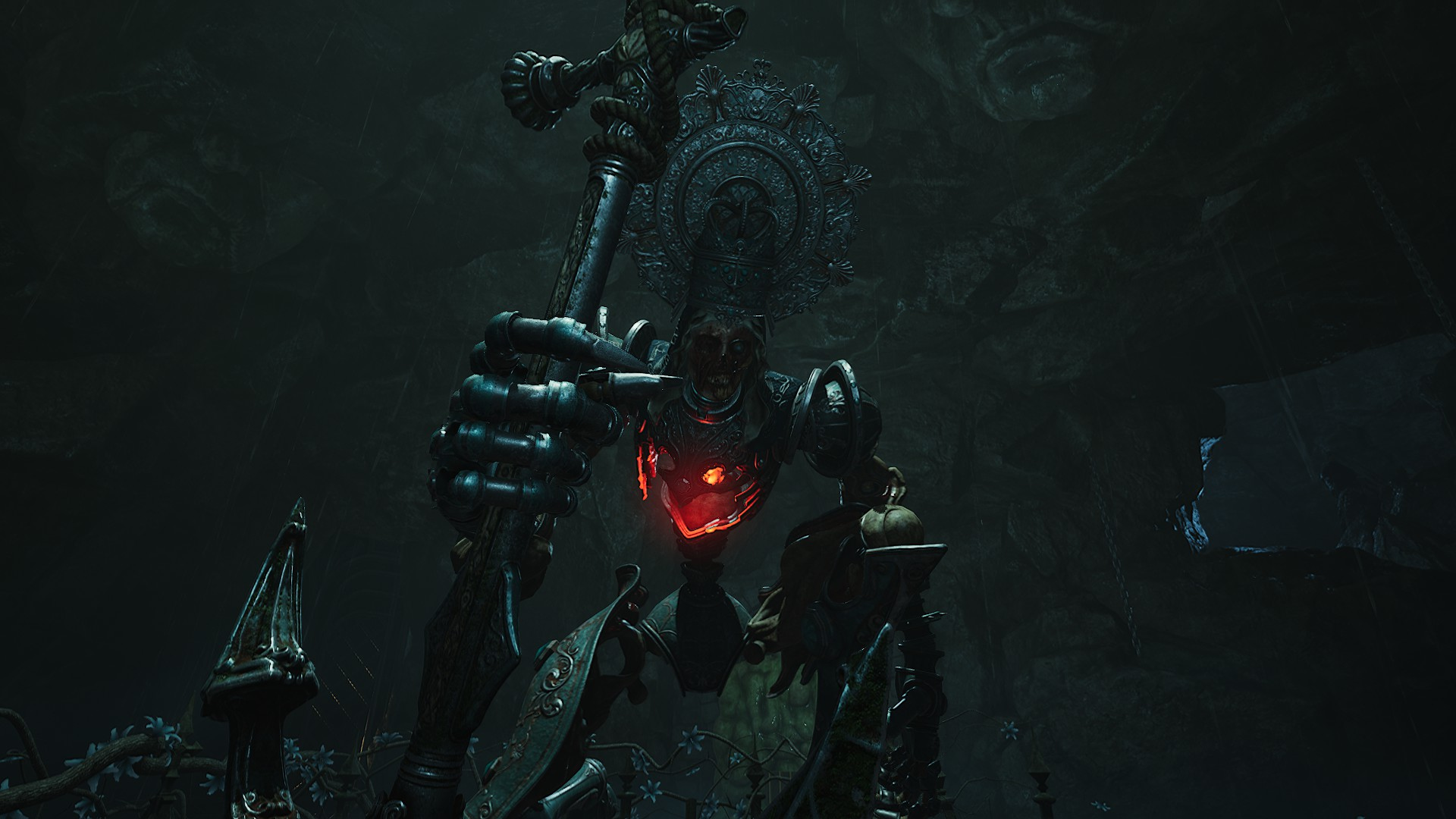


Crisol: Theater of Idols is an eye-catching title that appeared throughout multiple gaming presentations over the past couple of years, but it wasn’t until I played the demo last year that I really got excited for it.
When I played Crisol for the first time last fall, it immediately entered my radar for being reminiscent of some of my favorite horror FPS titles in the past. It’s here now and it’s a really solid game, and it has the makings of an incredible entry in the genre, but it falls flat in enough areas that prevent it from true greatness.
It’s in the blood
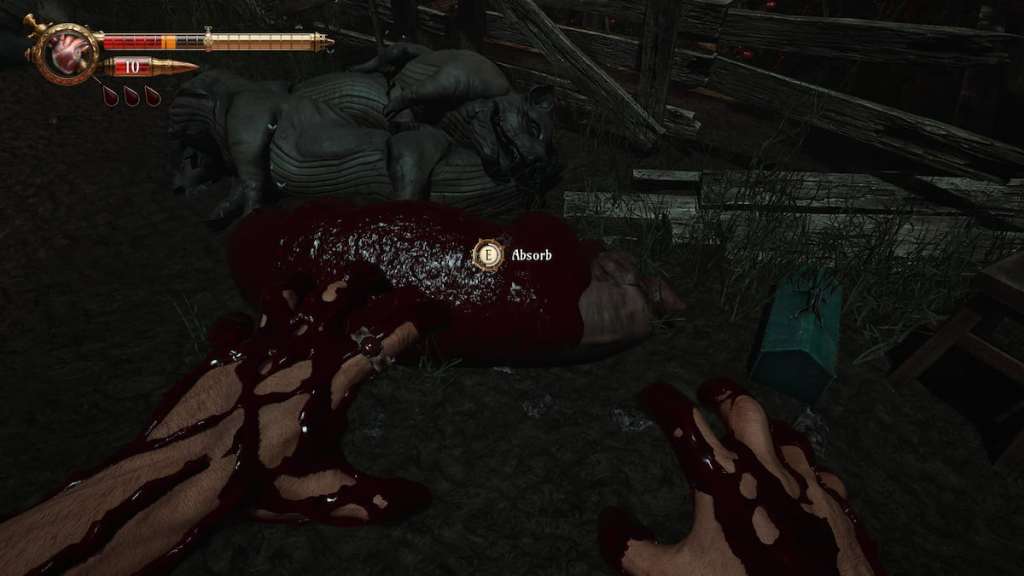
Blood. And lots of it. The debut entry from Madrid, Spain-based Vermila Studios, Crisol is defined by blood, both from a storyline and gameplay perspective. The main character, Gabriel, is a servant of the Sun god, and has been empowered to use his own blood as his main source of weaponry to deal with the pesky god of the sea.
Every weapon Gabriel picks up becomes infused with blood powers, and he must then use his own blood as ammunition for everything he uses. With each reload animation, Gabriel uses sharp orifices or spikes on the weapons themselves to stab himself and refill the magazines. It’s unnerving but kind of satisfying to see.
To do this, though, Gabriel must reload directly from his health bar, meaning Crisol is all about resource management…and that resource is you. With his blood powers, Gabriel can absorb the blood of animal corpses scattered around the locale, or by using blood vials.
But with each reload, and each time you take damage from the creepy statue-come-to-life enemies in the area, you must always keep an eye on your HP lest you end up offing yourself while reloading your shotgun.
I played on the normal base difficulty for my review and had a few close calls with enemies, but resources were in abundance. Harder difficulties ramp up the fear by making things a bit more scarce and enemies tougher to deal with, and I think the challenge on subsequent playthroughs will draw in the most hardcore gamers.
And it’s in the DNA
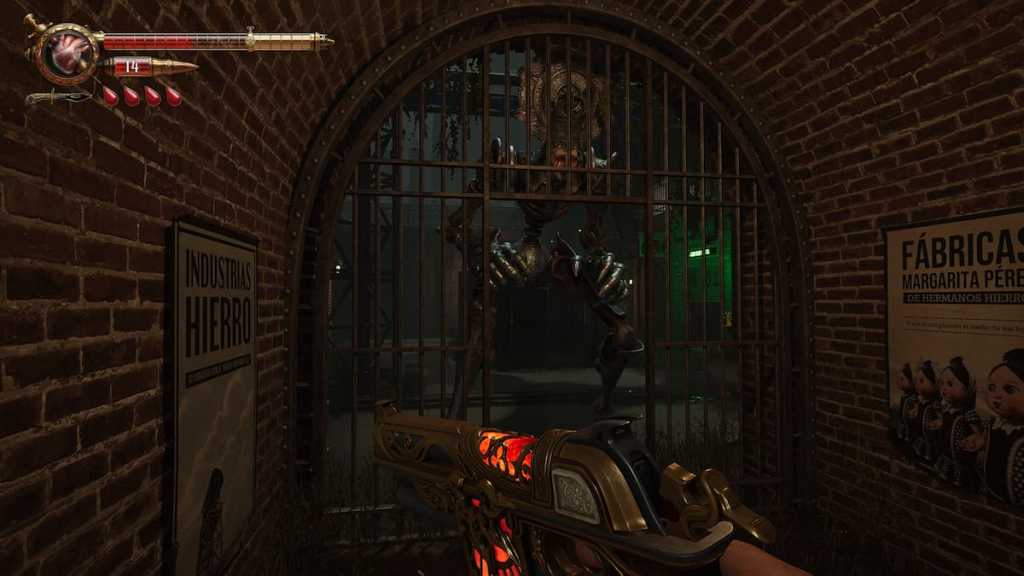
It’s impossible to play Crisol and not think about a couple of franchises that clearly inspired it. A lot of the game’s core systems and gameplay are directly reminiscent of the recent Resident Evil FPS titles, and the world itself and the enemies within it feel like something right out of BioShock.
A quirky merchant to upgrade your weapons? Check. Level structure designed around being blocked off from an area and then needing to find a way to get past it, like bolt-cutters to cut chained doors? Yep. It’s Resident Evil-inspired throughout, and as a fan of the series, I enjoyed Crisol’s presentation greatly.
The game world even comes complete with a giant, mechanized terror (Big Daddy, my beloved) named Dolores, who stalks you periodically through the game as you leave its self-contained buildings and enter more open areas. Unfortunately, Dolores brings the overall vibe of a RE3 Nemesis or BioShock Infinite Songbird, while never being nearly as menacing. She’s mostly bark with very little bite, as she is easy to avoid and more of a nuisance than a fright.
You can sneak around Dolores by walking, but as soon as you sprint, she hears you and will hone in on you. She’s so easy to avoid, though, by ducking into smaller areas where she can’t fit, that she never really feels like a threat. And that sucks, because her design is so creepy and cool.
Crisol’s other enemies, creepy statues come to life that stalk its streets and corridors, are relatively bland and easy to deal with unless you get overwhelmed, and can mostly be dealt with by using the game’s base pistol weapon.
General combat and movement are both a bit slower and clunkier than I would’ve liked, although I think that’s by design for the type of game Crisol is. But that, combined with a lack of threat from the enemies in the game, makes it feel like a missed chance.
But you can’t deny the view
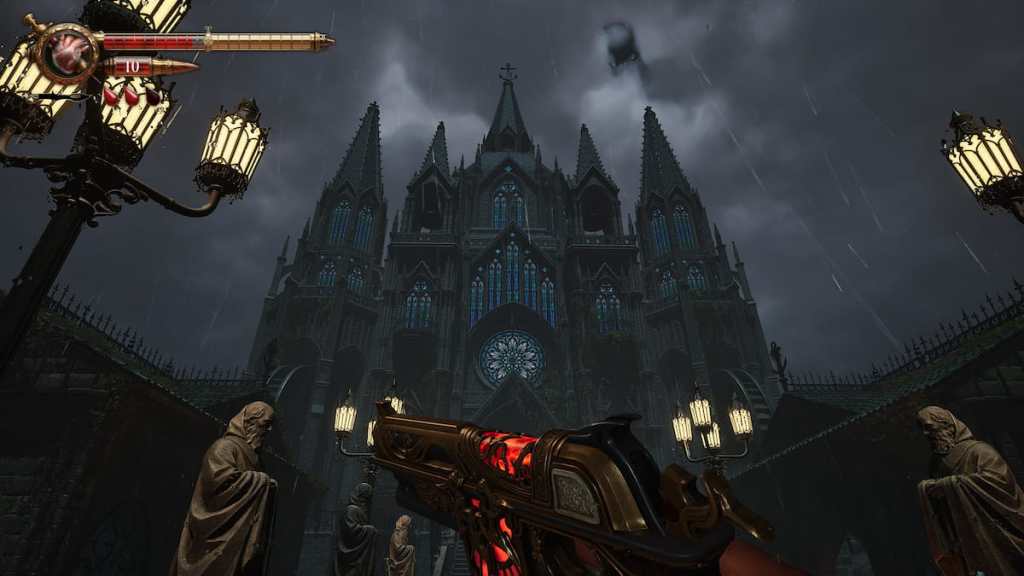
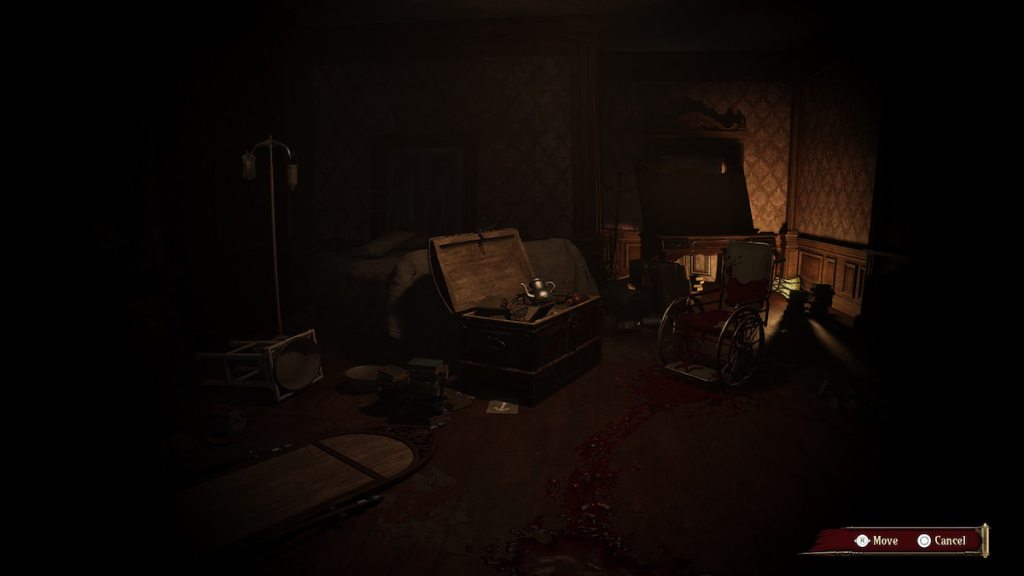
Crisol’s true main character is its setting, where the game truly shines. Like BioShock’s Rapture before it, the cursed island of Tormentosa was the main draw for me. While not nearly as iconic as the fallen undersea utopia, discovering the lore behind Tormentosa (in the overarching world of Hispania, “a twisted version of Spain” in the 1980s) is very enjoyable, presented through notes left behind and “blood memories” that replay as you move through areas, similar to BioShock’s tape recorders.
Navigating the dark alleyways and buildings after something terrible has gone down amid a conflict between the sun god and sea god that are paramount to the game’s events is the best part of Crisol, as the environmental storytelling is top-notch.
Tormentosa does commit some cardinal gaming sins, however, with yellow tape and red barrels galore. I’ve never been a huge critic of these tropes, because it’s just so quintessentially video game to, but they did kind of stand out a bit too much amid the gothic setting.
Crisol’s storyline, centered around this feud between the sun and sea gods and the people left in their wake, was promising and interesting for the majority of my 12-hour play time, but the ending moments left a bit more to be desired.
My other main gripe with the game was the puzzles. They range in difficulty from basic to kind of annoying, but the pacing issues they present took me out of the experience multiple times. One of them was bugged despite solving it correctly and required a restart, and some later in the game really slowed the pace to a crawl before I was able to brute-force them.
I really enjoyed Crisol, but can’t help feel like it could’ve been a bit more if some of these areas were ironed out or fleshed out a bit more. Still, for 10-12 hours of play for a game that’s $18 at launch, you can’t really go wrong.


